.png?w=1000&h=1000)
.png?w=1000&h=1000)
.png?w=1000&h=1000)
.png?w=1000&h=1000)
.png?w=1000&h=1000)
.png?h=1000&q=80&w=1000)
.png?h=1000&q=80&w=1000)
.png?h=1000&q=80&w=1000)
.png?h=1000&q=80&w=1000)
.png?h=1000&q=80&w=1000)
KHHI AITIHASIK (Gorkhali Sainik)
-
Free worldwide shipping
-
Free returns
-
Carbon neutral
-
Secure payments
a historic kukri that unified Nepal and defeated its enemy by its sharp edge and decisive blow, and in the process forever cemented its reputation as the most feared and functional knife of the world ...
Default Specification
- Blade Size (in): 13
- Handle Size (in): 4.5
- Handle Material: Rosewood
- Actual Weight (gm): 575
- Overall weight (gm): 775
- Shipping weight (gm): 1200
- Blade finishing: Unpolished
- Blade sharpness: Standard (very sharp)
- Blade material: 5160
- Place of Origin: KHHI, Kathmandu, Nepal
- Accompanying knives/B-up: None
- Blade thickness (mm): 8
- Handle finishing: Polished
- Sheath: Special treated buffalo leather scabbard
- Tang type: Stick
- Fixture: Iron
- Edge grinding: Semi convex
- Edge Hardness: 55-57 hrc
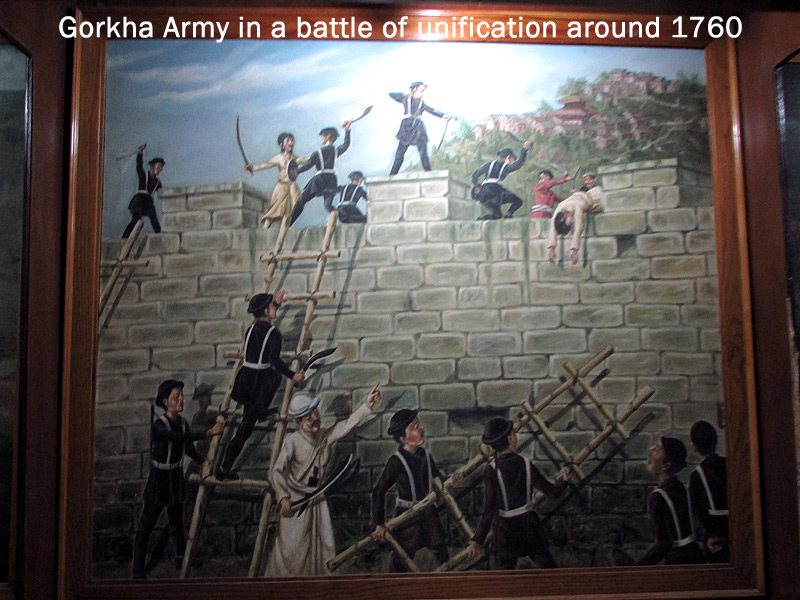
Kukri Used by Gorkhali Army during Unification of Nepal in 18th Century
"Aitihasik" meaning 'historic' or 'antique' is the legend of all khukuris that has a proud historic significance in Nepal.
A classic kukri from the House of Gorkha that played a vital role in uniting Nepal and that cemented its image forever in the glorious history of Nepal. Of the many kukris used in the unification campaigns that started in 1743 by the Gorkhali Sainik (Paltan), this “AITIHASIK (Gorkhali Sainik) Kukri” version was widely used as a dominant weapon in/for the battles.
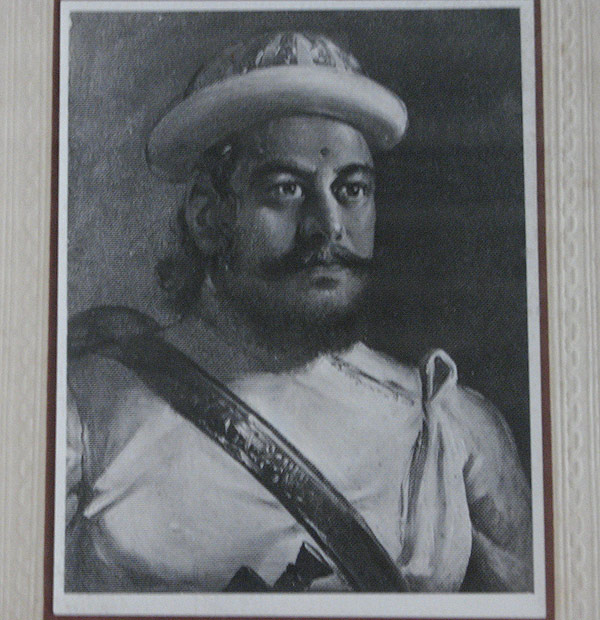
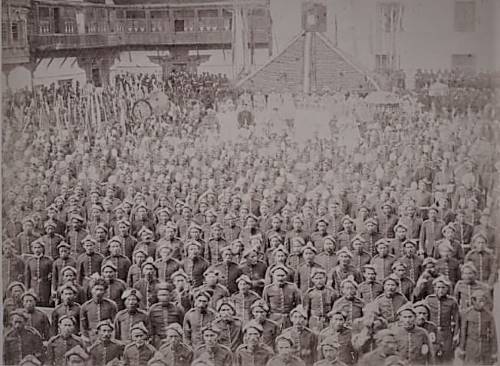
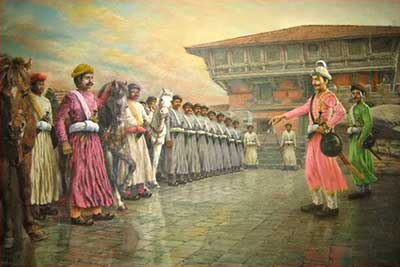
Nepal’s first recognized and documented army, the famous 'Gorkhali Sainik' also known as the 'GORKHAS', was initiated by the legendary King Prithivi Narayan Shah from Gorkha. The army with kukris, swords, spears, and a few pump guns in hand battled their way through countless kingdoms and eventually united all as one state in 1768, today which we know as modern 'Nepal'.
This kukri is the reproduced version of the originals issued to the king’s army exhibited in Nepal’s National Museum in Chauni, Kathmandu. It not only cleared its way for the successful unification but also advanced and resisted the “East India Company” of the British Government on all three sides of the country and also China in the North. Gorkha's ambitious expansion stretched from Kangra in the far west, near Punjab, to Sikkim in the east, and even into parts of the southern plains—an era now referred to as Greater Nepal. During these campaigns, the kukri knife played a crucial role, witnessing intense action on the battlefield.
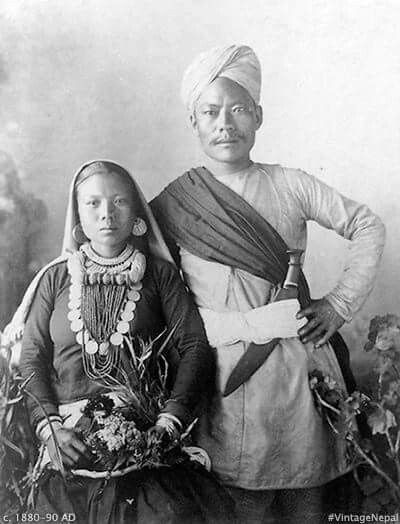
the 1st Nepali knife ever documented.. the knife British really feared
Blade:
The blade is 13inch long with unpolished finishing. The unpolished finishing enhances the cutting ability and durability of the blade as losing of temper is prevented by avoiding the long machinery process undertaken to polish a blade. The shape of the blade resembles the classic kukris where the blade is forged wider at the head/upper portion than the lower section. This is done for better swinging capability and to produce immense force when used.
Handle:
The handle is like the original classic 'parawal kukris' where the rat-tail tang goes through the rosewood handle and remains hidden. This tang is glued to the handle with epoxy and wood dust. In the exterior part of the handle, the middle section has rings and the end of the handle is slightly bent, both done to provide extra grip.
Scabbard:
The scabbard is made from water buffalo hide and wood. The interior has wooden pieces shaped like the blade to provide strength to the scabbard. The exterior leather has a unique pattern overlaid making the scabbard look beautiful. The top section features a frog loop for the scabbard to be carried around.
The kukri has always been a prime and preferred weapon/tool for the army and people, be it for warfare or household purposes. Soldiers in the battle carried the kukri for both reasons, as the main weapon and as a backup weapon in their armory. Locals carried for performing their daily activities as a typical farmer/villager in the rural. It's an everyday way of life for all walks of life but more importantly it was self-identity, dignity, and honor.
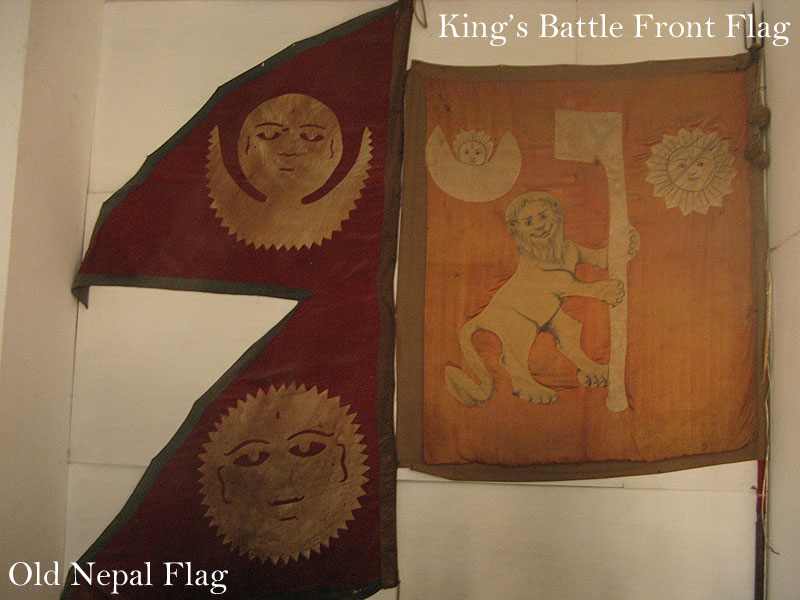
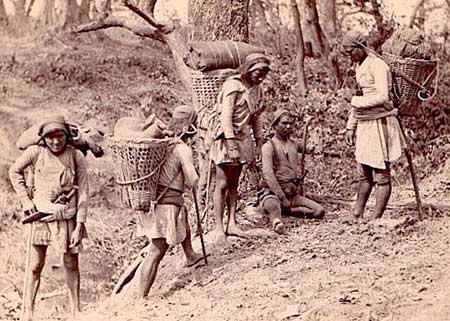
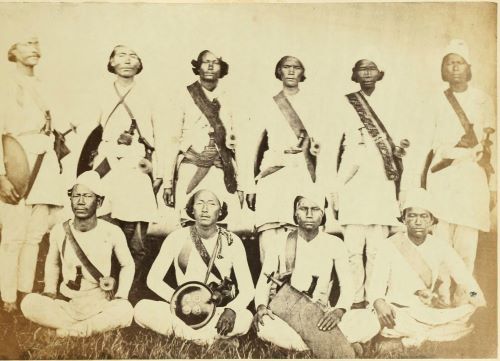
Below are some images relating to AITIHASIK Khukuri and Gorkhali Army during the 18th Century